From Skipped Screening to Emergency Room: The True Price of Avoiding Preventive Care
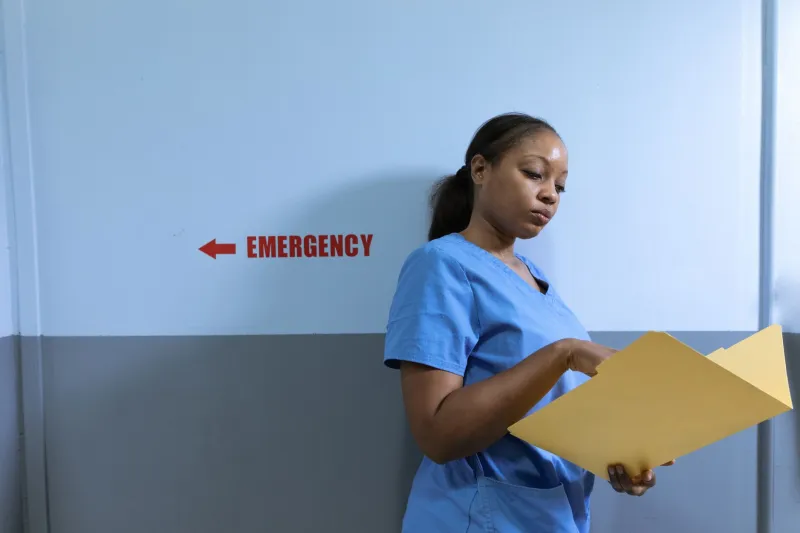
There is a particular kind of financial logic that governs how many Americans approach their health: if nothing hurts, nothing needs to be spent. It is an understandable instinct in a country where medical costs are already a source of significant household anxiety. Yet this reasoning contains a fundamental flaw—one that plays out in emergency departments, oncology wards, and cardiac intensive care units across the United States every single day.
The arithmetic of preventive care is not complicated. What makes it easy to ignore is that the savings are invisible until the disaster arrives.
The Emergency Department as a Symptom of a Broken Prevention Strategy
The United States spends approximately $2,000 per person annually on emergency department care—more than any comparable nation. A substantial portion of those visits involve conditions that are either directly linked to undetected chronic disease or significantly worsened by delayed diagnosis. According to the Centers for Disease Control and Prevention, six in ten American adults live with at least one chronic disease, and four in ten live with two or more. Most of these conditions—type 2 diabetes, hypertension, colorectal cancer, cardiovascular disease—are detectable long before they become emergencies.
Consider the trajectory of unmanaged hypertension. A blood pressure screening costs virtually nothing and takes under five minutes. Left undetected, elevated blood pressure silently damages arterial walls, strains the heart, and raises stroke risk for years before a single symptom appears. The average cost of a stroke hospitalization in the United States exceeds $20,000 for the initial event alone. Long-term rehabilitation, assisted living, and lost earning capacity can push lifetime costs well into six figures. The screening that might have interrupted this trajectory costs less than a restaurant meal.
What Late-Stage Diagnosis Actually Costs
The financial gap between early detection and late-stage management is not marginal—it is often an order of magnitude.
Colorectal cancer offers one of the starkest illustrations. When detected at Stage I, treatment costs average roughly $30,000 to $40,000 over the course of care, and five-year survival rates exceed 90 percent. When the same cancer is discovered at Stage IV—a scenario far more likely when screening has been avoided—treatment costs frequently surpass $200,000, and survival rates drop below 15 percent. A routine colonoscopy, which is covered without cost-sharing under most insurance plans for eligible adults, sits at the front end of that entire spectrum. The procedure that patients defer is precisely the one that determines which end of the cost curve they inhabit.
Similar dynamics apply to type 2 diabetes. The American Diabetes Association estimates that the average annual medical expenditure for a person with diabetes is approximately $16,752—more than twice what a non-diabetic individual spends. When diabetes progresses to complications such as kidney disease, neuropathy, or retinopathy, those costs escalate further. Early glucose screening, combined with lifestyle intervention, has been shown in landmark studies to delay or prevent the onset of type 2 diabetes in high-risk individuals by more than 50 percent.
The Hidden Costs That Never Appear in a Medical Bill
The economic case for preventive screening extends beyond direct medical expenditures. When a serious illness is diagnosed late, the financial disruption reaches into employment, household income, and retirement savings in ways that are rarely captured in healthcare cost statistics.
A cancer diagnosis at an advanced stage frequently necessitates extended leave from work. The Social Security Administration reports that cancer is one of the leading causes of disability claims among working-age Americans. Lost wages, reduced Social Security contributions, and early withdrawal from retirement accounts compound the direct medical costs in ways that can permanently alter a household's financial trajectory.
Caregiver burden represents another category of cost that is largely invisible in standard analyses. When a family member requires intensive care for a late-stage illness, other family members often reduce their own working hours or exit the workforce entirely. This ripple effect is not hypothetical—it is documented, widespread, and entirely connected to the original decision to defer a screening appointment.
Why Prevention Costs So Little by Comparison
The preventive screenings recommended by the U.S. Preventive Services Task Force—ranging from lipid panels and blood glucose tests to mammograms, colonoscopies, and lung cancer CT scans for eligible individuals—are covered at no cost to the patient under the Affordable Care Act for most insurance plans. Even for those bearing some out-of-pocket responsibility, the costs are modest relative to what they prevent.
A comprehensive metabolic panel, which screens for kidney function, liver function, blood glucose, and electrolyte balance, typically costs between $10 and $100 depending on the testing facility. A lipid panel that identifies cardiovascular risk costs a similar amount. Compared to the average cost of a single emergency department visit—which the Health Care Cost Institute pegs at over $1,400—these figures are almost inconsequential.
The challenge is not affordability in most cases. It is the cognitive distance between a healthy-feeling present and a hypothetical future crisis. Preventive testing requires spending attention and a small amount of time on a problem that does not yet feel real. Emergency care, by contrast, arrives uninvited and demands everything at once.
Reframing the Decision
The question of whether to schedule a preventive screening is rarely framed correctly. Most people consider it a question of health priority—how sick am I likely to be? The more accurate framing is financial: what is the expected cost of not knowing, and can I absorb it?
For the majority of Americans, the answer is no. Medical debt is already the leading cause of personal bankruptcy in the United States. A single hospitalization for a condition that was detectable years earlier can eliminate savings, destabilize housing, and generate collections activity that follows a household for years.
The institutions and conditions that lead to these outcomes are not inevitable. They are, in most cases, the downstream result of a decision that felt inconsequential at the time—the appointment not made, the referral not followed up on, the screening deferred to next year.
Acting Before the Crisis Arrives
At SmartMedic Testing, the fundamental premise is simple: informed patients make better decisions, and better decisions produce better outcomes. Scheduling a preventive screening is not a concession to anxiety or an acknowledgment of illness. It is the act of a person who understands that health intelligence is finite, that silent disease is common, and that early detection is the single most cost-effective intervention available in modern medicine.
The emergency room will always be there when crisis arrives. The question worth asking is whether you would prefer to meet it as a destination or as a place you never needed to go.