Quantified but Not Screened: How the Wearable Revolution Is Creating a Dangerous Blind Spot in Preventive Health
The Most Informed Generation of Patients Who Know the Least About Their Health
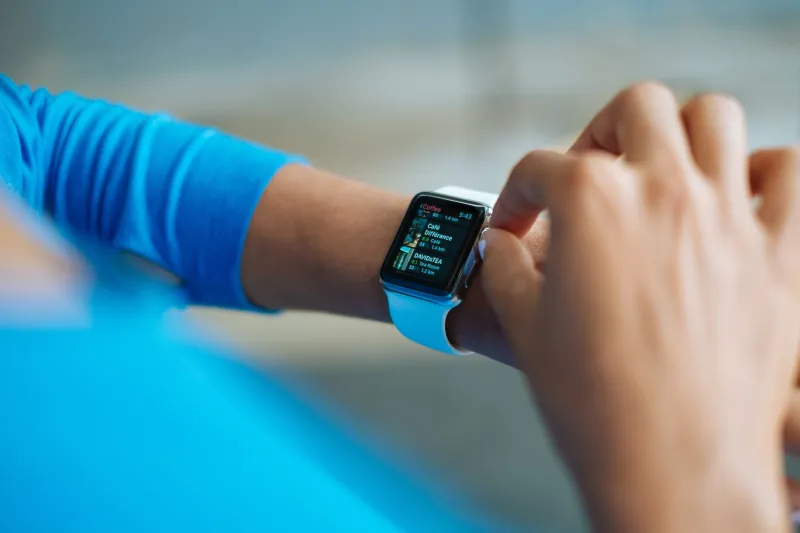
At no point in human history have ordinary people had access to more personal health data than they do right now. Smartwatches measure heart rate variability. Continuous glucose monitors track blood sugar in real time. Sleep apps generate nightly reports with the kind of detail that would have required a laboratory setting two decades ago. Fitness platforms aggregate thousands of data points per week, presenting users with dashboards that look, unmistakably, like medical records.
And yet, preventive screening rates in the United States remain stubbornly low. Colonoscopies are deferred. Lipid panels go unordered. Blood pressure evaluations happen at the pharmacy kiosk, if at all. The very people who can tell you their resting heart rate to the decimal point often cannot tell you when they last had a comprehensive metabolic panel.
This is not a coincidence. It is a pattern — and it carries real consequences.
What a Fitness Tracker Actually Measures
To understand the gap, it helps to be precise about what consumer health technology is designed to do. Wearable devices excel at capturing behavioral and physiological performance metrics: how many steps you take, how efficiently your heart recovers after exertion, how long you spend in REM sleep, how your oxygen saturation fluctuates during the night. These are genuinely useful data points, and the technology behind them has improved considerably.
What these devices do not — and cannot — measure is the internal biochemical environment that determines whether disease is forming beneath the surface. A smartwatch has no mechanism to detect early-stage colorectal changes. It cannot identify a lipid profile that quietly increases cardiovascular risk over years. It will not alert you to a thyroid irregularity, an elevated PSA level, an abnormal cervical cell, or a blood glucose trend that precedes a type 2 diabetes diagnosis by a decade.
The distinction matters enormously. Behavioral data tells you how your body is performing. Clinical screening data tells you what your body is becoming.
The Illusion of Informed Self-Awareness
Health technology companies have done exceptional work making their products feel comprehensive. The language of wellness apps borrows heavily from clinical vocabulary: "health scores," "body battery," "stress response indices," "metabolic efficiency." These terms are not meaningless, but they are also not diagnostic. They are proxies — useful approximations of wellness that can shift attention away from the conditions that don't announce themselves through fatigue or elevated heart rate.
Research has repeatedly confirmed that many of the most consequential conditions in American health — hypertension, prediabetes, certain cancers, elevated cholesterol — develop without producing symptoms that a person, or their device, would notice. The individual who logs eight hours of sleep, maintains a consistent step count, and tracks their macronutrients with precision may simultaneously be harboring a polyp, a lipid imbalance, or a blood pressure reading that demands clinical attention.
The data illusion is particularly pronounced among health-conscious adults who interpret the absence of bad metrics as evidence of good health. If the app shows green, the assumption becomes that nothing is wrong. That assumption has no clinical basis.
Why the Most Engaged Health Consumers Are Sometimes the Most Vulnerable
Counter-intuitively, people who are most invested in self-monitoring may face a compounded risk. Their engagement with health data produces a sense of active participation in their own wellness — and that sense of participation can substitute, psychologically, for clinical evaluation. They feel informed. They feel proactive. The idea that something important might be happening outside the reach of their devices is difficult to reconcile with the volume of data they already collect.
This is not a character flaw. It is a predictable cognitive response to information abundance. When you receive hundreds of health-related data points each week, the absence of alarming signals registers as reassurance. The problem is that clinical screening is specifically designed to detect conditions that generate no signals at all until they have progressed significantly.
Preventive screening is not a redundant layer for people who already track their health. It is a categorically different kind of inquiry — one that requires laboratory analysis, imaging, and clinical interpretation that no consumer device currently provides.
What Clinical Screening Offers That No App Can Replicate
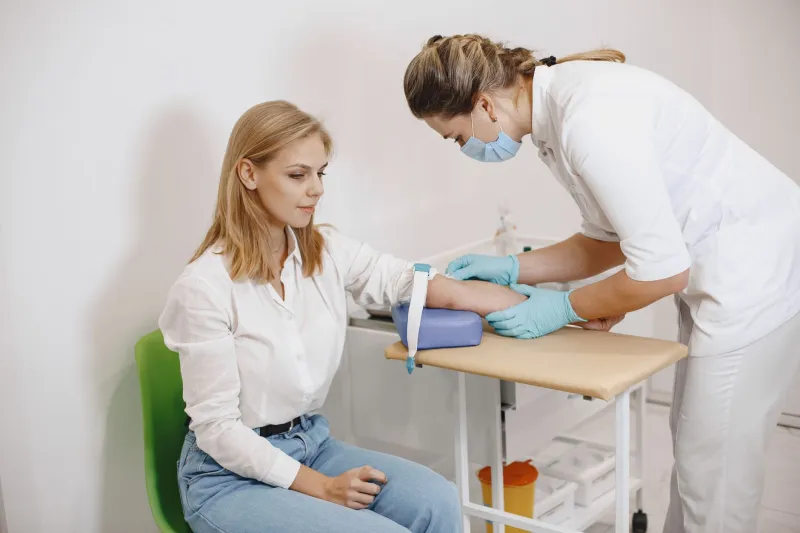
A comprehensive preventive screening protocol evaluates the body at a biological level that wearable technology cannot access. Blood panels reveal cholesterol fractions, inflammatory markers, kidney function, liver enzymes, and hormone levels. Imaging studies detect structural abnormalities. Cancer screenings identify cellular changes before they become symptomatic. These evaluations follow evidence-based guidelines developed through decades of population research — research that established which findings, at which thresholds, predict which outcomes.
The U.S. Preventive Services Task Force, along with major clinical organizations, has established age- and risk-specific screening schedules precisely because certain conditions are best detected at particular windows of time. Missing those windows — even by a few years — can meaningfully affect outcomes. A fitness tracker does not know your family history. It does not know your age-related risk profile. It does not know that the guidelines recommend a specific evaluation at a specific interval.
Only a structured clinical screening program, informed by your personal and family medical history, can provide that level of targeted evaluation.
Integrating Your Data Without Overestimating It
None of this is an argument against wearable technology or health apps. The data these tools generate can be genuinely valuable — particularly when shared with a clinician who can contextualize it alongside laboratory findings and a thorough health history. Heart rate trends, sleep patterns, and activity data can inform conversations with a physician in ways that enrich the clinical picture.
The critical shift is one of framing. Self-tracked metrics are inputs to a broader health evaluation, not substitutes for one. They are most useful when they exist alongside — not instead of — clinical preventive screenings conducted at appropriate intervals.
If your last blood panel was two years ago, your wearable data does not fill that gap. If you have never had a colorectal cancer screening and you are past the recommended age for initiation, your sleep score does not change that calculus. The two categories of information are not interchangeable.
Acting on What the Data Cannot Show You
The most effective approach to preventive health in the modern era is one that takes both streams of information seriously. Use your devices. Track your metrics. Engage with the data they produce. And then schedule the clinical screenings that your age, sex, and risk profile require — because those screenings are designed to find exactly what your most sophisticated consumer technology is not equipped to detect.
At SmartMedic Testing, our platform is built to help you identify which preventive screenings are appropriate for your situation and to make the process of scheduling them as straightforward as possible. Knowing your numbers is a start. Knowing what those numbers cannot tell you is where genuine preventive care begins.