The Unexpected Finding That Could Save Your Life: Understanding Incidental Discoveries in Preventive Screening
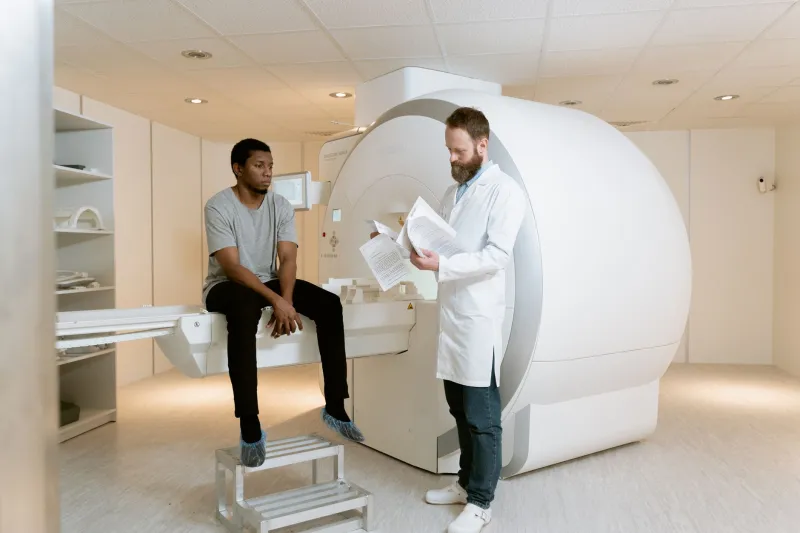
When the Test Finds More Than You Asked For
You scheduled the appointment for one reason. Maybe it was a cholesterol panel, a routine abdominal ultrasound, or a low-dose CT scan recommended because of your smoking history. The test proceeds without incident. Then the results arrive, and buried in the report is a phrase you weren't expecting: incidental finding.
For many Americans, those two words trigger an immediate spiral—anxiety about what it means, frustration that something new has entered the picture, and, in some cases, a quiet wish that the test had never been ordered at all. This reaction is understandable. It is also, from a medical standpoint, frequently misplaced.
Incidental findings—abnormalities discovered during screening that fall outside the original purpose of the test—are far more common than most patients realize. Studies suggest that imaging-based screenings alone produce clinically relevant incidental findings in a substantial proportion of patients. What those findings mean, and what should be done about them, varies enormously. Understanding that variance is where informed, proactive healthcare begins.
The Anatomy of an Unexpected Discovery
Not all incidental findings carry the same weight. The medical community generally distinguishes between findings that require immediate attention, those that warrant monitoring over time, and those that are essentially irrelevant to your long-term health.
A small adrenal nodule discovered during an abdominal scan ordered for an unrelated reason, for example, is one of the more common incidental findings radiologists encounter. The vast majority of these nodules are benign, non-functioning adenomas that will never cause harm. A follow-up imaging study may be recommended simply to confirm stability. In that scenario, the finding generates a modest amount of additional healthcare activity—but no meaningful health threat.
Contrast that with an incidentally discovered aortic aneurysm, or a pulmonary nodule with characteristics that warrant further investigation. In these cases, the screening that was ordered for one purpose has inadvertently opened a window onto a condition that, left unmonitored, could become life-threatening. The inconvenience of follow-up testing is, in retrospect, a small price for the information it provides.
The challenge for patients—and, frankly, for clinicians—is that the distinction between these categories is not always immediately obvious from the initial report.
Why 'Minor' Is a Word Worth Interrogating
One of the most important cognitive shifts a patient can make when receiving an unexpected finding is to resist the instinct to categorize it as either catastrophic or dismissible based on instinct alone. The word minor is particularly slippery in a medical context.
A mildly elevated calcium score on a coronary CT, for instance, might seem like a minor finding to a patient who came in feeling perfectly healthy. To a cardiologist, it may represent the earliest detectable signal of coronary artery disease—a condition that, addressed now through lifestyle modification and appropriate medication, can be managed far more effectively than it will be in a decade if left unacknowledged.
This is the core of what preventive medicine practitioners sometimes call the early detection advantage: the window during which an abnormality is small, localized, or functionally insignificant is precisely the window during which intervention is most effective and least disruptive. Minor, in other words, often means treatable.
The paradox that patients struggle with is this: the very thing that makes an early finding feel unimportant—the absence of symptoms, the small size, the seemingly low urgency—is also what makes it so valuable to catch.
The Psychological Weight of Knowing
It would be dishonest to discuss incidental findings without acknowledging the genuine psychological burden they can impose. Research on what clinicians call the incidentalome—the cumulative universe of incidental findings generated by modern diagnostic imaging—has documented real anxiety, sometimes disproportionate to the actual clinical risk, among patients who receive unexpected results.
This anxiety is not irrational. It is a human response to uncertainty. When a finding cannot be immediately classified as benign, the waiting period before follow-up testing can be genuinely distressing. Patients report intrusive thoughts, sleep disruption, and a heightened awareness of bodily sensations that may have nothing to do with the finding in question.
Healthcare providers and screening platforms have a responsibility to address this reality directly. At SmartMedic Testing, we believe that informed patients navigate uncertainty more effectively than uninformed ones. When you understand the statistical likelihood that a given finding is benign, when you have a clear follow-up plan, and when you have access to clinical guidance rather than internet speculation, the psychological burden of an unexpected finding becomes considerably more manageable.
The answer to screening-related anxiety is not less screening. It is better communication, clearer context, and a healthcare relationship built on transparency.
The Cost of Looking Away
For every patient who receives an incidental finding and experiences anxiety, there is a counterfactual worth considering: the patient who never got the screening, never encountered the unexpected result, and never had the opportunity to act on early information.
In the United States, late-stage diagnoses remain a significant driver of both mortality and healthcare cost. Conditions that are highly manageable when caught early—certain thyroid abnormalities, early-stage kidney disease, pre-cancerous lesions of various kinds—become dramatically more complex and expensive to treat once they progress to symptomatic stages. The incidental finding that felt like an unwelcome complication was, in many of these cases, the event that prevented a far worse one.
This is not an argument for reckless over-testing or for generating anxiety without clinical purpose. The medical community continues to refine guidance on which screenings produce actionable information versus which generate findings that cause harm through unnecessary follow-up procedures. These are legitimate and important distinctions. But within the framework of evidence-based, guideline-appropriate screening, the discovery of an unexpected abnormality is more often an opportunity than a threat.
How to Approach an Incidental Finding Constructively
If you receive a report that includes an unexpected finding, several practical steps can help you move forward with clarity rather than anxiety.
First, resist the temptation to interpret the finding in isolation. A radiology report is written for clinicians, not patients, and the language used—while technically precise—can feel alarming without context. Speak with your ordering physician or a specialist before drawing conclusions.
Second, ask specifically about the clinical significance of the finding relative to your individual health profile. Age, family history, and existing conditions all influence how a finding should be weighted.
Third, understand that a recommendation for follow-up imaging is not a diagnosis. It is a standard protocol for establishing whether a finding is stable, changing, or resolvable. Most follow-up studies confirm benign stability.
Finally, consider the alternative. The information you now have—however unexpected—is information you can act on. That is precisely the promise that preventive screening makes, and it is a promise worth accepting, even when the delivery is not what you anticipated.
Screening as a Long-Term Investment in Yourself
Preventive care, at its best, is not a single transaction. It is an ongoing process of gathering information about your body before that information becomes urgent. Incidental findings are, in many respects, proof that the process is working—that modern diagnostic tools are sensitive enough to detect early signals, and that you were present enough in your own healthcare to receive them.
The patient who learns today that a small vascular anomaly warrants monitoring is in a fundamentally different position than the patient who learns about it five years from now in an emergency room. The discomfort of uncertainty in the near term is a reasonable exchange for the advantage of early knowledge.
At SmartMedic Testing, our mission is to help you know your health before your health demands to be known. Incidental findings, understood correctly, are not obstacles to that mission. They are, sometimes, its most important outcomes.