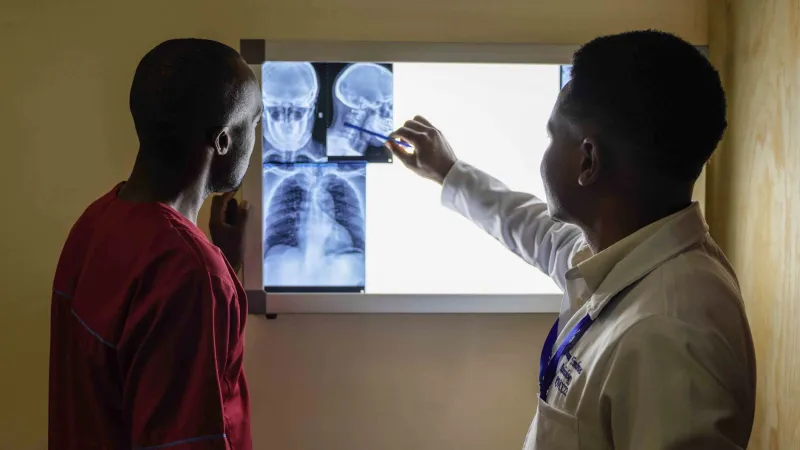
When Knowing Your Risk Becomes the Reason to Look Away

There is a troubling irony embedded in the way many Americans approach preventive health care. The individuals who stand to gain the most from early detection — those who carry documented genetic variants, have watched a parent die from heart disease, or know that colon cancer has claimed multiple relatives — are frequently the same people who delay, defer, or quietly abandon the screenings that could protect them.
This is not a fringe phenomenon. It is a well-documented behavioral pattern with serious consequences, and it deserves more attention than it typically receives.
The Information-Action Gap
Most people assume that awareness drives action. If you know you are at elevated risk, surely you will do something about it. Public health campaigns are built on this premise. Yet the relationship between knowledge and behavior is far more complicated than that.
Researchers studying health decision-making have identified what is sometimes called the information-action gap — the space between knowing what should be done and actually doing it. For individuals with heightened genetic or familial risk profiles, this gap can be especially wide. The very weight of that knowledge can become paralyzing rather than motivating.
Consider someone who has watched a parent receive a late-stage cancer diagnosis. The emotional residue of that experience does not simply translate into a resolved commitment to screen early. For many, it does the opposite. It creates an association between testing and devastating news — a psychological equation where the act of scheduling an appointment feels like inviting catastrophe rather than preventing it.
Fear as a Barrier, Not Just a Feeling
Fear is often discussed in vague, dismissive terms when it comes to health avoidance. People are told to push past it, as though it were a minor inconvenience rather than a powerful cognitive force. But clinical research on health anxiety suggests that fear of a positive result is among the strongest predictors of screening avoidance, particularly in populations with known risk factors.
This fear operates on multiple levels. There is the immediate dread of receiving a difficult diagnosis. There is the downstream anxiety about what that diagnosis would mean for employment, insurance, relationships, and identity. And there is something more existential: the loss of a future that felt certain. For many people, not knowing preserves a sense of possibility. A clean mental slate, even an uninformed one, can feel preferable to confirmed uncertainty.
What makes this especially dangerous in the context of preventive screening is that early-stage disease rarely announces itself. The absence of symptoms is not reassurance — it is simply silence. And silence, for conditions like prostate cancer, Type 2 diabetes, or hereditary cardiovascular disease, is not the same as safety.
Denial With a Sophisticated Disguise
Not all avoidance looks like avoidance. Some of the most effective forms of denial wear the costume of rationality.
"I'll schedule it after the holidays." "My doctor hasn't brought it up, so it probably isn't urgent." "I read that those tests have high false-positive rates anyway." These statements sound measured and considered. They feel like reasonable positions. But in many cases, they are sophisticated mechanisms for postponing a confrontation that feels emotionally unbearable.
Information overload plays a supporting role here. The American health information landscape is saturated with conflicting guidance — varying screening age recommendations, debates over the clinical utility of certain genetic panels, and media coverage that alternately catastrophizes and minimizes health risk. For someone already predisposed to avoidance, this noise provides abundant justification for inaction. When everything is contested, doing nothing can feel like the cautious choice.
The Social Dimension of Screening Avoidance
Avoidance is rarely a purely individual decision. Family dynamics, cultural attitudes, and social norms all shape how people respond to health risk.
In some families, discussing genetic risk is considered taboo — an invitation to worry that no one wants to open. In others, a stoic tradition of not seeking medical attention until absolutely necessary makes preventive care feel foreign or even self-indulgent. Men, in particular, are socialized in ways that frequently conflict with proactive health behavior. Acknowledging vulnerability, scheduling appointments, and engaging with the possibility of illness can all run counter to deeply ingrained cultural scripts.
These social forces do not operate in isolation. They combine with individual fear and cognitive overload to create a reinforcing architecture of avoidance that can be genuinely difficult to dismantle without intentional effort.
Strategies for Breaking the Pattern
Understanding why avoidance happens is necessary, but it is not sufficient. What follows are practical approaches for individuals who recognize themselves in the patterns described above.
Name the fear explicitly. Vague anxiety is harder to address than a clearly articulated concern. Write down the specific worry: "I am afraid that if I get tested, I will find out I have the same disease that killed my father." Externalizing the fear often reduces its power and makes it easier to examine rationally.
Reframe the purpose of screening. Testing is not a verdict — it is information. Early detection for most conditions significantly expands treatment options and improves outcomes. The appointment is not the beginning of a bad story; it may be the beginning of a better one.
Start with a single, low-stakes step. Scheduling a comprehensive health screening does not have to happen all at once. Booking a consultation to discuss your risk profile with a medical professional is itself a meaningful action. Momentum builds from small, completed steps.
Bring someone with you. Social support changes the experience of medical appointments. Having a trusted person present — whether a partner, a sibling, or a close friend — can reduce anxiety and improve follow-through on recommended next steps.
Set a specific date, not a vague intention. Research on behavior change consistently shows that implementation intentions — concrete plans with a defined time and place — are far more effective than general commitments. "I will schedule my screening before the end of this month" is more actionable than "I should really get tested soon."
What Early Action Actually Looks Like
For individuals with elevated genetic or family-based risk, proactive screening is not an act of pessimism. It is an act of informed self-determination. Knowing that a condition runs in your family gives you something most patients never have: a head start.
At SmartMedic Testing, the premise is straightforward — knowing your health status early creates options that waiting forecloses. That principle is not abstract. It plays out in real clinical outcomes, in treatment paths that remain open versus those that close, and in the quality of life that comes from managing a condition identified at Stage I rather than Stage IV.
The goal of preventive screening is not to confirm your worst fears. It is to give you the knowledge you need to act before those fears have any reason to materialize.
If you carry a known risk factor, the most powerful thing you can do is not to wait until symptoms appear. It is to find out what is actually happening in your body — and to find out now, while the range of possible responses is still wide open.