The Avoidance Tax: What American Men Are Really Paying by Skipping Preventive Screenings
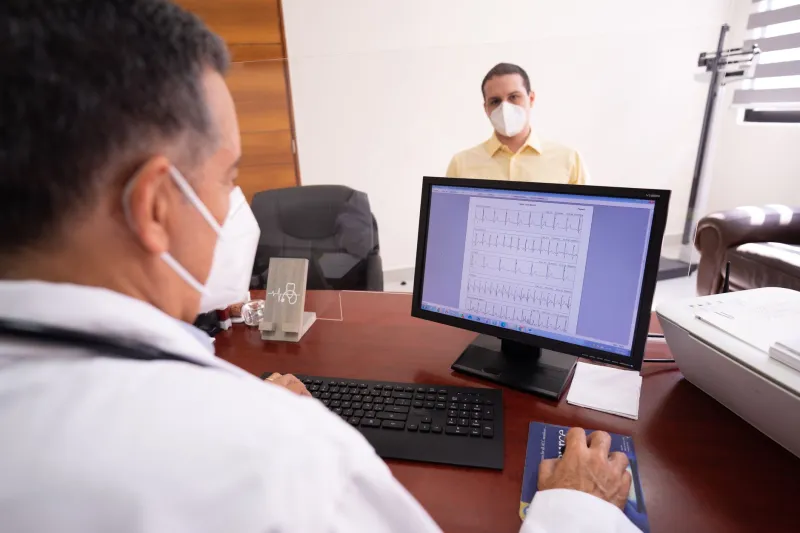
There is a particular kind of cost that accumulates silently — not on a credit card statement, not in a quarterly report, but in the body. For millions of American men, that cost is the direct consequence of avoiding routine health screenings until a symptom becomes impossible to ignore. By then, the bill is often far steeper than anyone anticipated.
According to the Agency for Healthcare Research and Quality, men are approximately 25 percent less likely than women to have visited a physician in the past year. The Kaiser Family Foundation has reported that nearly one in three American men has no regular healthcare provider at all. These are not abstract statistics. They represent real individuals — fathers, partners, colleagues — who are quietly accumulating risk with every skipped appointment.
The Culture of Invulnerability
To understand why men avoid preventive care, it helps to examine the cultural conditioning that begins early. From childhood, many American men absorb the message that seeking help — medical or otherwise — signals weakness. Stoicism is rewarded. Pain is minimized. The idea of sitting in a waiting room to discuss cholesterol levels or prostate health feels, to many men, fundamentally at odds with how they understand themselves.
This is not a character flaw. It is a predictable outcome of deeply entrenched social norms. Research published in the American Journal of Men's Health has consistently demonstrated that masculine identity norms — specifically those emphasizing self-reliance and emotional restraint — are among the strongest predictors of healthcare avoidance in adult men.
Adding to this is a practical layer of resistance: time. Men who are primary earners, business owners, or caregivers often cite scheduling conflicts as a genuine barrier. A half-day away from work for a colonoscopy prep or a fasting blood panel can feel like a professional liability. What this framing misses, of course, is the far greater cost of a Stage III cancer diagnosis that a Stage I detection could have prevented.
What Gets Missed — and What That Means
The diseases most likely to claim American men's lives are also among the most detectable in their early stages. Cardiovascular disease, the leading cause of death in men in the United States, can be flagged years in advance through lipid panels, blood pressure monitoring, and coronary calcium scoring. Colorectal cancer — the second-leading cause of cancer death in men — is largely preventable when polyps are identified and removed during a routine colonoscopy. Prostate cancer, type 2 diabetes, hypertension, and chronic kidney disease all follow a similar pattern: long asymptomatic periods during which intervention is both possible and highly effective.
The tragedy is not simply that men die of these conditions. It is that they frequently die of advanced versions of conditions that were, at some earlier point, entirely manageable. The American Cancer Society estimates that the five-year survival rate for localized colorectal cancer exceeds 90 percent. For distant-stage colorectal cancer, that number drops to roughly 13 percent. The interval between those two statistics is often nothing more than a missed screening appointment.
Reframing the Appointment: Performance, Not Surrender
Healthcare professionals working in men's health have increasingly found success by shifting the conversation away from illness and toward optimization. Rather than framing a lipid panel as a test for something wrong, consider it a baseline performance metric — the same logic that drives men to track sleep quality, monitor their resting heart rate, or log their macronutrient intake.
Dr. Will Courtenay, a leading researcher in men's health behavior, has argued that healthcare engagement rises significantly when men understand medical data as actionable intelligence rather than a verdict on their health. When a screening reveals elevated blood glucose, it is not a diagnosis of failure — it is an early signal that dietary or lifestyle adjustments can intercept a much larger problem.
This reframing is not merely rhetorical. It changes the psychological calculus. A man who sees his annual blood panel as part of maintaining peak function is far more likely to schedule it than one who views it as an acknowledgment of decline.
The Financial Argument Men Cannot Ignore
For those who remain unmoved by health outcomes alone, the economic case for preventive screening is compelling. The CDC estimates that chronic diseases — many of them preventable or manageable with early detection — account for 90 percent of the nation's $4.1 trillion in annual healthcare expenditures. On an individual level, treating advanced cardiovascular disease, late-stage cancer, or unmanaged diabetes costs exponentially more than the screenings that might have prevented their progression.
High-deductible health plans have made some men reluctant to spend on preventive care, but the Affordable Care Act mandates that most recommended preventive screenings be covered at no out-of-pocket cost when provided by in-network providers. Many men are unaware of this provision. The financial barrier, in many cases, is a perceived one.
Making the First Appointment the Easiest Step
For men who have been away from routine care for years, the idea of re-engaging with the healthcare system can feel overwhelming. Where to begin? What tests are actually necessary? How does one find a provider who will not make the experience feel clinical and impersonal?
At SmartMedic Testing, we have designed the screening process to be direct, efficient, and respectful of your time. Our platform allows you to identify which screenings are appropriate for your age, family history, and risk profile — and to book them without navigating a complex referral system. Whether you are overdue for a basic metabolic panel, a PSA test, or a cardiovascular risk assessment, the path to that information is shorter than you may think.
The avoidance tax is real. But unlike most financial penalties, this one can be reduced — starting with a single appointment. The data you gather today becomes the baseline that protects you for decades to come. That is not a burden. That is leverage.
Ready to know where you stand? Browse SmartMedic Testing's men's health screening options and book your appointment today at smartmedic-testing.com.